Traversing the
Red Planet.
Presenting Kartikeya 2.0. Engineereed for extreme terrain and autonomous exploration.
Loading 3D Engine...
Presenting Kartikeya 2.0. Engineereed for extreme terrain and autonomous exploration.
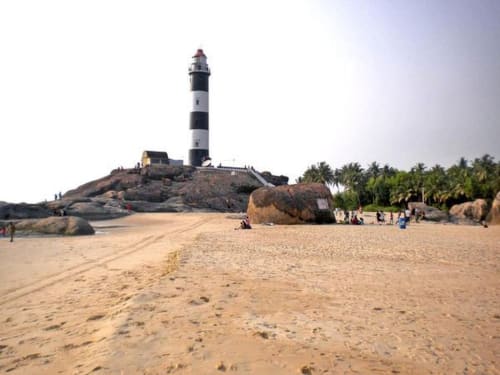
SPROS IRC is a space robotics engineering competition. It challenges university students to conceptualise, design, develop and operate an astronaut-assistive next-generation space Rover and perform specific missions in Mars simulated conditions.
The objective of the competition is to provide students with a real-world interdisciplinary engineering experience, combining practical engineering skills with soft skills, including business planning and project management.
Commencing this year, teams will get the opportunity to perform autonomous operations in Delivery Mission.
Date
Jan 28 - Feb 2
2026
Venue
Udupi, Karnataka
India
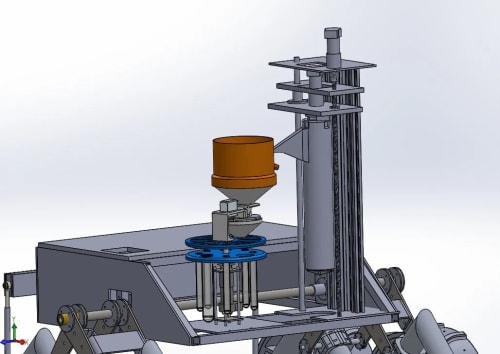
The Astrobiology Expedition transformed our rover into a mobile science laboratory operating in a simulated Martian terrain. Our objective was to identify scientifically promising sites and analyze their potential to support microbial life. The rover performed terrain exploration, panoramic imaging, and close-up documentation to justify sample site selection. Using onboard instruments, we measured parameters such as subsurface temperature, humidity, pH, and atmospheric conditions. Our rover successfully collected a subsurface soil sample from beyond 10 cm depth and sealed it in a contamination-free cache. All scientific analysis was performed autonomously on the rover, replicating real Mars mission constraints. The mission concluded with a detailed science report explaining our findings and their relevance to Martian habitability. This task tested our scientific thinking, data interpretation, and precision engineering under strict time limits.
✦ABEx
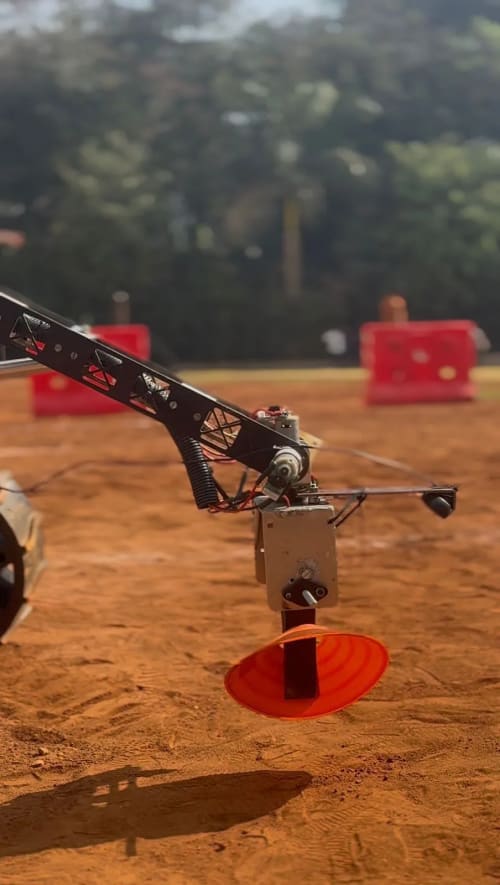
The Reconnaissance and Autonomous Delivery Operation challenged our rover’s navigation, perception, and autonomy capabilities. In the reconnaissance phase, the rover explored a wide terrain, identified scattered objects, and logged their GPS coordinates with visual confirmation. Strategic path planning was crucial to maximize coverage within limited time. During the autonomous delivery phase, the rover picked up selected objects and delivered them to designated locations using GPS-based navigation. Full autonomy during delivery demanded accurate localization, obstacle handling, and stable control logic. Our robotic arm and storage mechanism played a key role in reliable object handling. This mission emphasized real-world challenges faced in extraterrestrial logistics and supply operations. Successfully completing it demonstrated our rover’s readiness for long-range, semi-autonomous missions.
✦R&DO
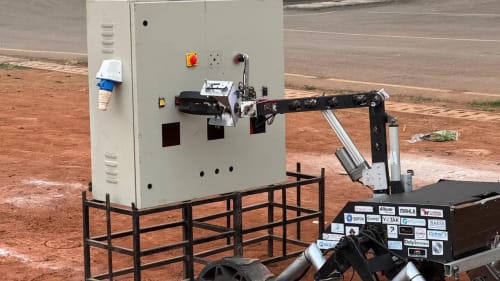
The IDMO task focused on precision manipulation and fine motor control using a robotic arm. Our rover performed complex maintenance actions such as opening panels, operating switches, turning knobs, and inserting connectors. Each operation demanded high positional accuracy and stable vision feedback from onboard cameras. In the deployment phase, the rover transported instrument caches and placed them in predefined orientations at designated locations. After deployment, the rover identified and relayed coded information displayed on the instruments to the base station team. This task closely simulated astronaut-assistive robotic operations on Mars. It tested not only mechanical design but also control algorithms and operator coordination. IDMO truly highlighted the importance of dexterity and reliability in space robotics.
✦ID&MO
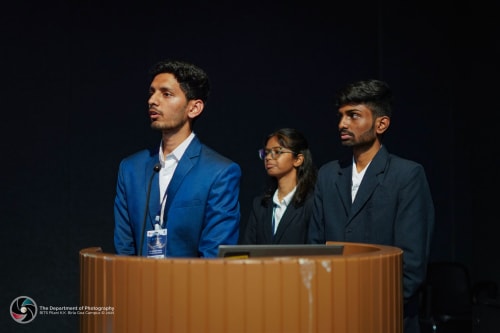
The Project Implementation and Management Assessment evaluated our team beyond just the rover’s performance. We presented the complete lifecycle of our project, from ideation and design to manufacturing, testing, and iteration. Judges assessed our system engineering approach, task distribution, failure handling, and timeline management. We discussed challenges faced during development and how we adapted our strategies to overcome them. The session also allowed us to showcase technical trade-offs and design evolution. PIMA reflected our ability to work as a cohesive engineering team under real-world constraints. It validated not just what we built, but how responsibly and efficiently we built it. This assessment strengthened our understanding of large-scale engineering project execution.
✦PIMA
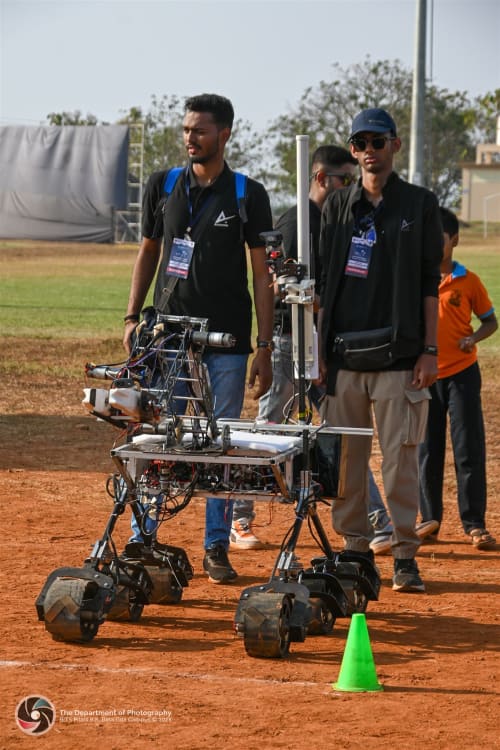
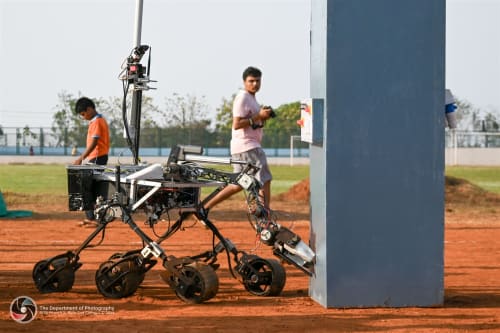
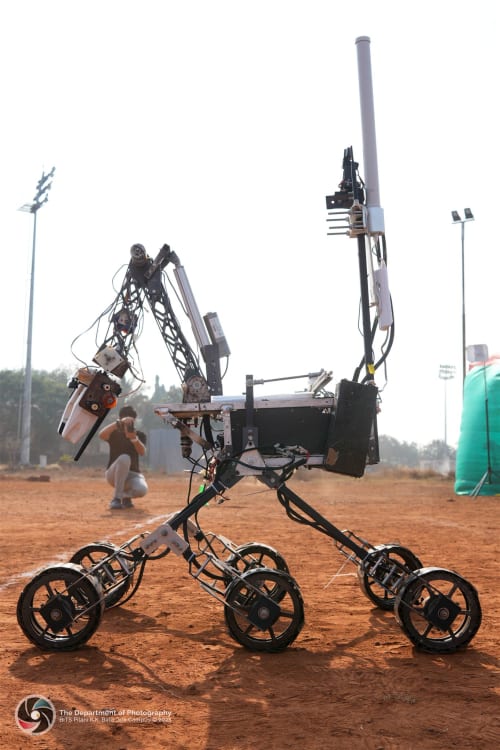
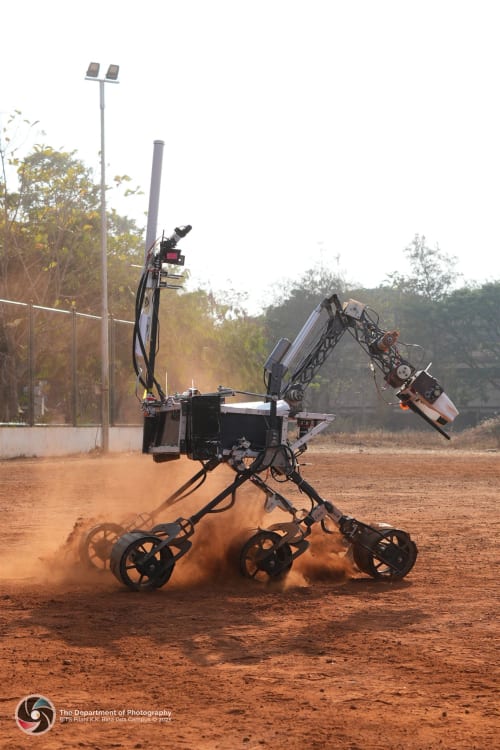
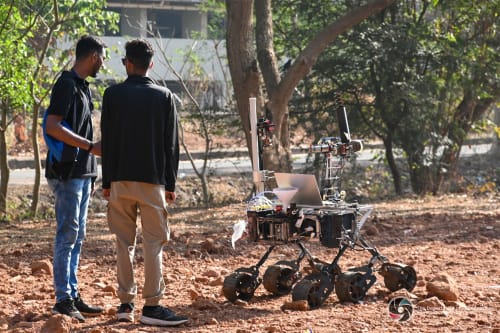

Team Automatons boldly entered the International Rover Challenge (IRC) 2025, ready to test our rover on tough terrain that resembled Martian conditions, with sandy dunes and rocky craters. We faced teams from around the world in this prestigious space robotics competition, where participants worked to build advanced machines capable of planetary tasks such as sample handling and obstacle navigation. Our rover was engineered for durability and precision, featuring robust grippers, wheels capable of traversing sharp rocks, and intelligent onboard computing systems that enabled safe path planning and hazard avoidance.
Countless hours were spent in the lab refining sensors, tuning control systems for smooth motion, and integrating vision systems with mechanical components to achieve reliable autonomous operation. Challenges were frequent—components failed, code malfunctioned, and systems required repeated calibration—but each setback strengthened our teamwork.
By collaborating across mechanical, electronics, and software domains, we learned the importance of resilience, coordination, and problem-solving under pressure. These experiences not only improved our technical capabilities but also reinforced our unity as a team. With valuable insights gained in autonomous navigation and real-world testing, we now look ahead to IRC 2026 with renewed confidence. Equipped with experience and determination, Team Automatons is committed to returning with a more capable rover and a stronger competitive edge, aiming for the top position. Watch our journey here: IRC 2025 after movie